Strategy

What if the Customer is Wrong?

It was a drizzly day at the Dallas airport. The last man aboard a Southwest Airlines flight did little to hide his frustration with the seating process, elbowing his way across a row to the last open seat. In the process he left an oversize suitcase sticking out of the luggage compartment.

A flight attendant approached the man to suggest checking his bag. The suggestion stirred a debate that escalated until the troubled passenger punched the flight attendant, laying him out across a row of seats.

Was that customer “always right?” The answer is obviously “no.” It’s a scenario often described by former Southwest CEO Herb Kelleher to prove the point that the customer is NOT always right.

Other companies including Disney have followed in Southwest’s footsteps, acknowledging that the customer might be wrong. The result is a better, safer work environment for employees who, in turn, can create a great experience for the customers who ARE right, and gracious accommodations for the guests who aren’t.

Christian

Standard
Economic Development

Beginner’s Guide to Performing Miracles

Digress with me for a moment from our regular conversation, the topic of creating profitable agricultural business. I love that topic (hence our blog), but it’s not Rachel or my ultimate goal in life. I dare suggest that it may not be your ultimate goal either.

Imagine a young couple in your town. They marry and have a child, a young boy who grows to be a charming and healthy two-year-old. Then the boy gets sick. He loses weight, can’t eat and goes to the hospital. There, doctors can’t help him. The boy gets more and more ill as the parents watch. The doctors tell them their son won’t make it.

Then arrives a stranger to the hospital from a foreign country. The stranger offers to heal the child, an act that seems impossible. But, with no better options, the parents tell this person to go ahead, praying for a miracle. The child is healed.

Now let’s revise the story. The young couple lives in Africa, and the stranger is you. The boy is dying from a disease caused by contaminated water, and the local doctors and the child’s parents don’t have a clear understanding of microbiology. By explaining that the local water source is contaminated, and providing a new well (in collaboration with a few other strangers who each pitch in $50 through an organization like @ScottHarrison ’s @CharityWater), you save the life of someone else’s child. To them, your effort seems like a miracle.

I share this story because someone shared it with me. It has been on my mind for months, this concept that we each have seemingly normal gifts and resources that are, in a different context, the makings of a miracle.

Christian

jerry_can

Standard
Farming

Saving the World, one Grazing Cow at a Time

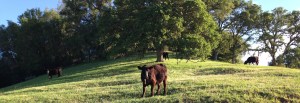
Cows on Hill

(This piece was originally published in the March 2015 newsletter from Six Sigma Ranch.)

Something interesting happened during the first five years we owned Six Sigma Ranch, and it wasn’t what my university degree in agriculture would have led me to expect.
The previous owner, Russell Rustici, had raised cattle on the property for 30 years, a practice that we put on hold during our first five years while we developed the vineyards. It puzzled me to see that the grass quality in our pastures declined during these five years. Shouldn’t the pastures grow spectacular grass when we let them rest from grazing? The answer to that question, in short, is “no.” And it took quite a bit of research to understand why. Stay with me for a minute…
Imagine a tree. Each year it grows leaves and then drops them to make room for new ones. Now imagine your lawn, likely comprised of fescue and other perennial grass species. You mow it, which removes the old growth and makes room for new growth. The result is that your grass stays healthy.
Now imagine that you don’t mow your lawn. The grass will get tall, but the old growth will crowd out the new growth, and eventually the plants will die. In the same way, land left un-grazed in arid climates like ours becomes a desert. For proof, look at large parts of Africa and the South West of the United States; as soon as human populations push the native grazers out of the picture, the desert takes over. That’s a serious problem.
In short, grass that gets moved (or grazed) stays healthy, while grass that is ignored gets weak and dies. Historically, large herds of grazers kept the world’s grasslands healthy. Predators kept the herds tightly bunched and moving, preventing overgrazing.
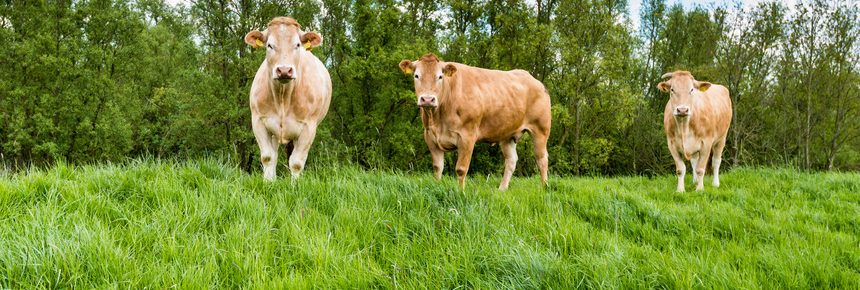
Today, moving herds of cattle continue to improve the quality of the pastures at Six Sigma Ranch. And, while it makes sense for the ecological benefits alone to keep cattle on the Ranch, it offers several extra benefits. Cattle make fertilizer for our vineyards, decorate the pastures, and supply our customers with some of the world’s finest pasture-raised beef.

Christian

PS.  If you would like to have each new blog post delivered to your inbox, just enter your email in the “follow box” on the home page, or simply email us at Rachel@SixSigmaRanch.com or Christian@SixSigmaRanch.com

Standard
Farming, Personal Growth

I Learned to Flip a Sheep From YouTube

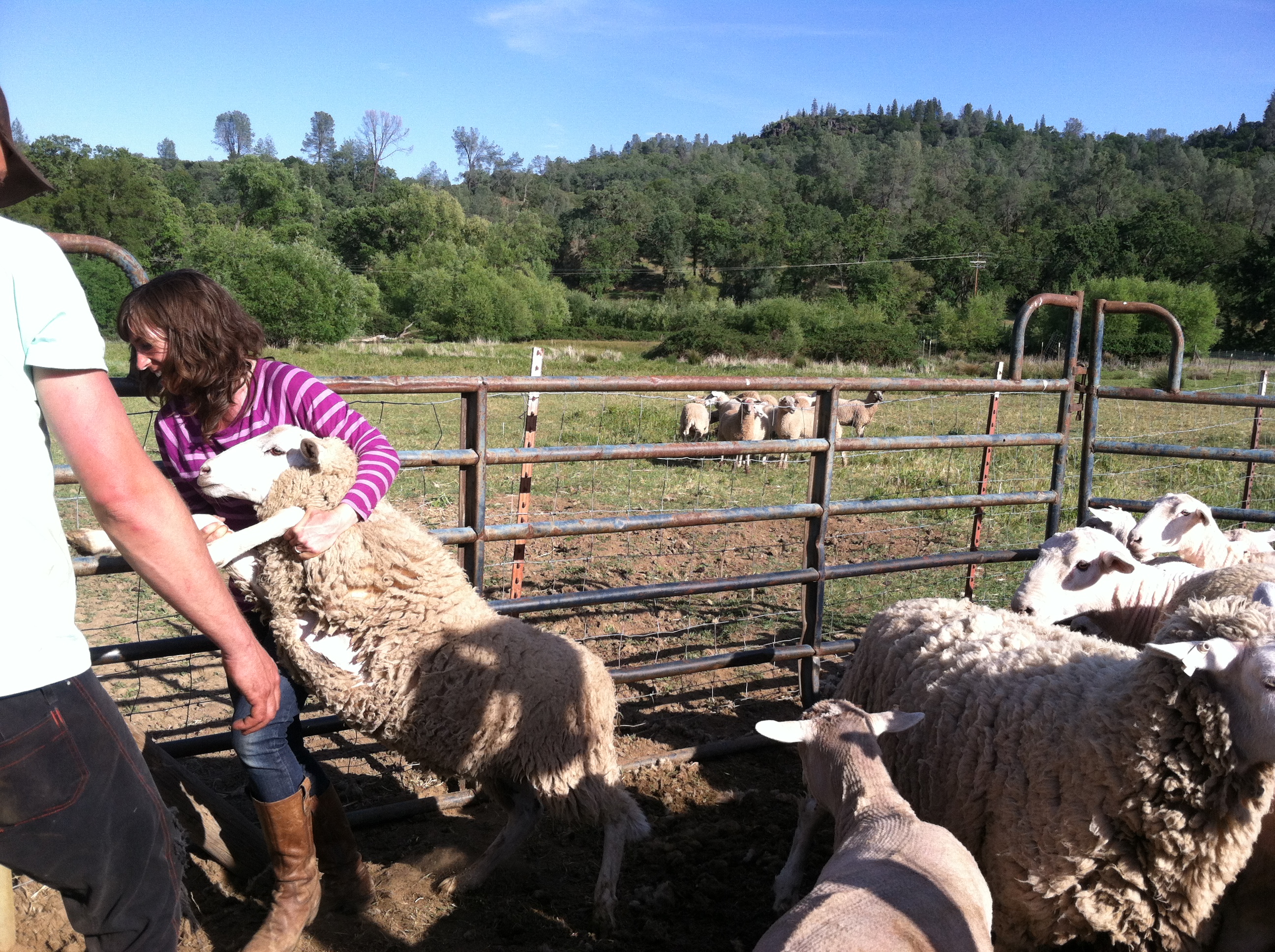
2014-05-11 17.35.58 copy

Indeed, I learned to flip a sheep from YouTube. (See Picture for my sheep handling skills) We had one that required urgent care while the experts at Kaos Sheep Company, whom we usually call, were not available. So I spent an evening at home watching videos and practicing on imaginary sheep in the air. The next day, I went out and performed the deed, from catching to flipping. It took two tries and was exhausting, but the task was done. When the experts came out for shearing, I got some tips on how to do it better; my method was almost right, but if I had to do it my way all day, I would have been too tired to walk. With an adjustment from an expert, things became easier for me, and less dramatic for the sheep.

My lesson: Seek the advice of experts, even if you feel like you already know what you are doing. Most likely, you can do better.

Rachel

Standard
Uncategorized

“It is amazing what can be accomplished if it doesn’t matter who gets the credit.” – Harry Truman

harry-s-trumans-quotes-6

Have you ever worked in a company where everyone was trying to get ahead? It is such discouraging place to be.

I’m tempted all the time to take credit, whether or not I deserve it. I am tempted to think no one will notice my talents if I don’t tell them.

Harry Truman said, “It is amazing what can be accomplished if it doesn’t matter who gets the credit.”

When I get hung up making sure everyone knows how cool I am, it discourages people from wanting to work with me.  But if I make sure to give credit to the people who really are talented, we might actually accomplish the goal of our group.

Who knows, maybe we could even change the world!

Rachel

Standard
Uncategorized

“Content” versus “Awesome”

aquaoir3-640x428-1

How do you get on Fox News, Huffington Post, Orlando Sentinel and the United Kingdom’s Telegraph?

Simple. Just do something remarkable.

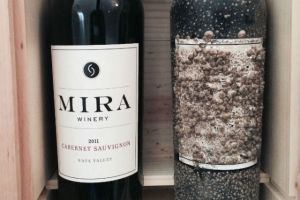
That is exactly what Mira Winery did when they released a wine aged 60 ft. under the surface of the ocean. Based on the surprising quality of wines discovered in sunken ships, Mira set out to test the power of the ocean to improve their Napa Valley Cabernet Sauvignon.

A much less interesting approach to publicity was on display at a session I attended for the wine industry. Well-paid professionals shared well-meaning opinions on the impact of PR calendars, social media posting frequency, and “content creation” in general. Only one of them suggested creating REAL content, stories that matter, stuff people will share with friends because it’s just that interesting.

What might you create that people won’t be able to stop sharing?

Christian

Standard
Uncategorized

To Wholesale or Not to Wholesale, That is the Question

wholesale-ebay copy

In Gaining Ground, the very entertaining story of saving a family farm, author Forrest Pritchard tells of a funny old lady who commands him at a farmers market to never wholesale. It’s an interesting point. In the wine industry, when you wholesale, you sell your product at a lower price to distributors, stores or restaurants. They, in turn, mark up your product so they can also make a profit. As soon as you mark down your price, you need to make your money on volume. You may have to make sacrifices to quality in order to reach efficiency and volume.

One might ask, why ever get into the wholesale business? It is the compelling idea that you can sell more products to one customer (a grocery store) and maintain that one relationship. If you are selling to individuals, you have to maintain many individual relationships to equal the quantities you are selling to the grocery store.

So, I’ll ask you. How do you feel about wholesaling? If you do sell wholesale, how does your business model look?

– Rachel

Standard
Uncategorized

A Double-Dog-Dare: “What do you measure?”

tape-measure

That was the first question Dr. Eric Sims asked me when we sat down to lunch.  “What do you measure?”

Eric is a wine business consultants in the Napa Valley, and one of the finest financial minds I’ve ever met. As a professor, he taught a piece of my MBA program. I later asked him to advise on activities at Six Sigma Ranch and Winery.

“Well,” was my answer, “we measure sales. And we count the guests in the tasting room. What else is there?” The professor continued relentlessly: “And how often do you talk about those numbers with the team?”

I soon discovered where the man was going with his questioning: Whatever gets measured (and talked about,) that’s what grows.

The Tractor Supply Company, a well-known supplier of farming equipment, tracks monthly sales daily on a graph in the break room. If they hit the monthly goal, everyone gets a bonus. If they don’t, the bonus goes away. You can bet there are no unattended customers on the sales floor near the end of the month.

We now have one or two key metrics for each job at Six Sigma Ranch. We talk about sales and club memberships at our weekly meeting. We track things like “average membership duration” and “annual yield per acre.” These aren’t complicated, but they help everyone keep a clear focus.

If you aren’t yet sold on metrics, I dare you to try something: Pick a metric. Try sales, customer visits or even your own weight. Review it every morning for a month. Then tell us what happened!

Christian

Standard
Uncategorized

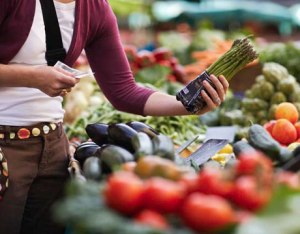
Choosing Products (that Create Profit)

market-homework-lg

A friend asked this week about picking products that balance customer needs with his own farming interests. We don’t have all the answers, but we’re happy to take a stab at it!

Here are 6 things to consider:

Grow something you like! I would make a terrible lettuce farmer. I think it’s boring. For that reason, I have no business growing lettuce! Picking a product you enjoy helps you to produce it well, sell it with enthusiasm, and enjoy the leftovers.

Grow something people eat. This is obvious, but often missed. Don’t start emu eggs or badger-hair brushes unless you have a strong conviction about them. Instead, pick something people are already buying and create a brand and quality that outperforms existing options. Hint: Check out your local grocery store to see what gets shelf space. If there is a giant cooler full of eggs, they’re likely a hot item. If there is no section for pomegranates, they’re likely less popular.

Consider cash flow. Some products sell seasonally (think turkeys), while others grow seasonally. Obviously, a turkey farmer has to plan for the influx of cash during Thanksgiving to last the rest of the year, while an egg farmer has to acknowledge that chickens produce less in the winter. Financial discipline, or a mix of seasonal products, will keep seasonality from causing problems.

Consider your climate. Merino wool sheep hate hot weather (for obvious reasons) while California grows terrible coffee. So, if you’re settled on a location, pick crops or livestock that fit there. Or, if you’re settled on a product, move to where it will thrive.

Consider perishability. Before planning a business around a product, remember that some products have a great shelf life (think honey) while others don’t (think lettuce). While neither is necessarily better, it’s worth keeping in mind, to make sure your product fits your schedule and temperament.

Consider consumption rates. At Six Sigma Ranch, we sell beef by the quarter (100 lbs.) because people eat a lot of beef. For that reason, we can do a lot of business with a few hundred customers. If we were selling only olive oil, we would need to acquire and maintain more customers to hit the same sales numbers.

Christian

Ps. We love writing on topics from blog guests, so keep them coming!
Standard
Uncategorized

Best of 2014

IMG_3189

Thank you all for an AWESOME first year at YouHaveThreeCows.com!

Here are the top 3 most popular topics from 2014, in case you missed one:

1. “If you start a business and take out a loan, you’re a moron.” –  Mark Cuban

2. Trading in the $4,425,925 Pick-Up Truck

3.  Marriage, Work and My Personality Issues

Finally, do you have any topics you would like to see in 2015? Anything related to the business of agriculture (or, apparently, marriage and personality issues =) is fair game.  Shoot us an email or a comment below, and we will cover them in this new year.

Rachel and Christian

Standard